Tuesday, March 24, 2015

Villains, Redux

Last July, The Three and I talked villains. The Further Four and I just got around to this topic today, mainly because they didn't exist at the time. (Well, the girls existed, individually, just not as a writing group.)

Freewriting villains is fun, so we started out by using Rah's favorite random stuff generator to generate some negative character traits. The three traits the girls liked were rude, secretive and violent. The instructions were simple: Spend five to seven minutes writing a brief bio about a bad guy or girl with those three traits. Make her nasty. Tell me what kinds of horrible things she does.
Yummmmm.

As usual, we got some crazy diversity out of this group of girls who are all about the same age and come from pretty similar backgrounds: adult villains and teen villains and villains of indiscriminate age. Villains who like order and hate long hair; villains who eat bunnies for breakfast; villains who get grounded; and one evocatively named villain called Gobstopper Grasshopper.

After we had our villains firmly in hand, we chatted villainy. This was pretty high level and basic: We talked about how the villain's job is to oppose the main character and cause conflict. We talked about how villains aren't always evil. Sometimes, they're antagonists, like your mom when she destroys your hopes and dreams by not letting you go hang out with your friends because your room still isn't clean.

Most importantly, though, the villain is the hero of her own story. To write a great villain, you need to understand her as well as you understand your main character. You need to answer those three questions: What does my villain want? What's in her way? Does she get it?

To get inside the head of our crazy villains we wrote again, this time from the point of view of the villain. Two rules for this go-round: Write in first person. Don't make your character not evil all of a sudden.

I didn't want these villains to suddenly stop eating bunnies for breakfast; I wanted to know what made that bunny-eater eat bunnies? What had the world done to make him that way? How did he feel about the world being arrayed against him?

Cranky Rah knows how she feels when the world is arrayed against her: Irritable. Vengeful. And in sudden, desperate need of a clean house.
Here's Cranky Rah, her friend Quaker Ann and other
like-minded cleaniacs, power-washing the world.

Thursday, March 5, 2015

From Cranky Rah's Cave: Waxing Philosophic

Cranky Rah is in the throes of a winter malaise. She should be working on the next draft of The Work in Progress, but the brain is Decidedly Not Interested. This happens from time to time, and it is one of the few things in life Cranky Rah does not stress about. It will come back. She will write. That is what Cranky Rah does.

But it's had me thinking about big questions like Why Does One Want to Get Published? and Why Does One Write?

Abandon all hope,
ye who trespass in Rah's cave.
My awesome writing friend Cool J once heard an author say that you need to know why you want to get publishednot judge that reason, just know it. For Cool J, it's the need for the visual artist in her to hold her words in her hands. For me, well, let's just say we're not going that deep into Rah's cave today. Beware the caution tape.

Sometimes when I talk to writers, though, it seems like that's all there is. There's a lot of talk about agents and editors and getting published and fretting about deadlines and working through another draft and, quite frankly, it seems like a lot of Work. The kind of work that makes you wonder why anyone would do it in the first place.

So I started wondering: Why do we write? Not how did we start writing or why do we want to get published or why do we write what we write about, but why do writers put pen to paper or fingers to keyboard? What drives the creation?

Phones hung on walls and had these
things called cords, which basically
handcuffed you to the phone.
I had a bright yellow one.
I don't remember exactly when I started writing, but it was sometime in middle school, when I met Jobie. She wrote stories, and I thought that was neat, so I started writing stories. We spent all summer writing and reading our stories to each other, and I mean that pretty much literally. This was the Age of Atari (an epoch of the Stone Age), before home computers or the Internet. Heck, this was before Call Waitingand there was the rub: My mom worked part time, and she wanted to be able to get in touch with my sister and me if she needed to. So she required that I not be on the phone for the 10 minutes before and after the top of the hour (like 9:50 to 10:10 a.m.) and for the 10 minutes before and after the bottom of the hour.

Jobie and I spent the 20 minutes of each phone ban writing, and then we spent the next 20 minutes on the phone, reading to each other. Then 20 minutes writing, 20 minutes reading. Over and over. All. Day. Long.

What did we write about? Well, let's just say that within the Age of Atari was the Period of The Lost Boys. Jobie was into vampires way before Stephenie Meyer. I was more into rock stars and this one black-haired boy from school, but they could be vampires, too. Anything was possible.

That's when the populating of my brain started, I guess. I don't write because I have some Great Deep Lesson I want to share with the world or because I want to explore the Big Questions of Life. Maybe that happens anyway in the telling of a good story, but I write because there are people in my brain, and they want out.

Connor might be related to this one.
There's Wren, who lives in a treehouse and wakes up in other places a couple of times a week. Ink, the black-haired boy who hears color. Vivian, who wishes her mom's tattoo wasn't on the cover of that country album, and Jacoby with his mad uncle. Connor, who inherited an island of seals, and Waverly, whose dad digs up dead people.

They're all hibernating right now, which I totally get. It's supposed to snow today. Again. And we're all totally over it. But spring is coming. Soon we will be awash in vitamin D, and everyone will wake up. Maybe they're stirring a little even now, which is good, because it's getting a little cramped inside my head.

Sunday, February 22, 2015

Group Hug: Playing with Setting

In Rah's world, the word "tomorrow" doesn't always mean "tomorrow." Sometimes it means "I know I said on Thursday I'd post the next day about writing about setting with The Three, but on Friday I was too busy rock climbing and eating tacos (not at the same time), and on Saturday I was too busy rock climbing and eating a Proper Pie (ditto on not at the same time)." I think we can all agree that these are awesome reasons to not get around to posting.

Anyway, The Three and I did write about setting on Thursday. Since so many good things come in threes, our writing exercise about setting had three steps.

Step One: Get a Character

Start by choosing a character name from a random name generator. Spend five minutes writing a brief bio of the character. You can write anything you want about the character, but he or she must be contemporary. The character name we picked was Jude. The Three love an androgynous name.

After we wrote about Jude, we spent a few minutes talking about what The Three know about setting, which was pretty much what I talked about with The Further Four back in January.

Step Two: Get a Setting

Now, spend five to seven minutes writing about the carousel in the picture, in list or paragraph form, whatever rocks your world. Be sure to include as many of the five senses as you can, and don’t forget to include the carousel's surroundings (meaning if you're riding the carousel, you can see outside of it to what's going on around it).


I loved how a couple of The Three ended up giving the carousel a personality: ominous or lonely. Because that's where we were going next, with the discussion of setting having a personality.

Once we'd had that discussion, it was time to try out writing about setting as a character.


Step Three: Give the Setting Some Anima

(Not anime. Anima. Important distinction.)

Now we want to look at how setting can play a role in how your character behaves. We’re going to place him or her in the setting we wrote about earlier, but we want to give this setting a personality. When you write, you can add in as many other characters as you want—or none at all—but you must assume that there are a bunch of people in this setting, just like in the picture. Write for 10 minutes. Share.

This can be a little tricksy, so you can always assign a personality for the setting: You want the setting to annoy your character or confuse your character or protect your character. In fact, try it all three ways and see how each affects your character and the plot, because the harmony of the world digs things in threes. Like three tacos or three rock climbing partners or three really fabulous teen writers who let me experiment on them every month with writing prompts.

Thursday, February 19, 2015

Going Deeper into Location, Location, Location

The setting: Rah's living room, with seven inches of snow outside. Tea and cocoa and some miraculous cookie/brownie concoction, compliments of the tasty brain of L. A random name generator on the laptop and a feather ballpoint pen that doesn't work. A candle that smells like grass and the spring that is Way. Too. Far. Off.

At its most basic, setting is about how a character’s physical surroundings look, feel, sound, smell and taste. Setting locates the reader in our world. Setting helps the reader believe. (Like Rah believes that she is over winter.)

But setting isn’t just a backdrop for a character’s actions. Setting can reflect something about a character’s personality. It can be a kind of secondary character itself, helping or hindering the animate characters in the story. It is also something of a tyrant who likes things just so.

Ivan, dude, you can put flowers
around you, but it doesn't
make you less Terrible.

Setting is a Tyrant

Our world has rules: Rules of physics limit our physical movements; laws of government and cultural customs regulate our behavior (more or less). Part of the fun of writing is weaving a world a little or a lot different from ours, but a believable world will have rules. They can be outrageous, but they must be consistent—unless your plot involves the magnetic poles of your planet flipping and totally screwing up the telepathic abilities of your three-legged frog creatures.

Awooga-awooga! Keep it under control. I can’t say it any better than this great comic by xkcd.


Setting is a Mirror

Things Rah is not allowed
to touch.
Look around your room. Is it Scandinavian neat or typhoon messy? Is that a half-empty Big Gulp at your elbow or a turned mug the color of a sunset, teabag dangling over the side? Is that flower pot inhabited by a meticulously trimmed bonsai or a sad stick that might once have been a plant?

Setting is personal. What we surround ourselves with and how we take care of it says something about us—though what it says isn’t necessarily obvious. That sad stick of a plant doesn’t mean you have a black thumb like Cranky Rah. It could mean that lying scum of an ex-boyfriend gave it to you, and you’re just treating it now like he treated you.

But setting doesn’t have to be familiar to our characters to illuminate them. We can reveal a lot about our characters by throwing them into situations that make them uneasy or downright miserable. That’s where we learn what kind of people they really are.

We can also learn a lot about a character’s mental state. Say Special Agent Wilhelmina is out of her depth, unsure of herself. All she needs to save the world is a 9-volt battery and leopard-patterned duct tape, but the only store nearby is the Walmart. Shelves groaning with cheap junk from China loom over her; blue-vested employees vaporize around a corner every time she calls out to them; her path is blocked again and again by carts filled with screaming children. Not only does none of this help poor Willi, it reflects her own out-of-controlness.

Ouch! How did that clunky writing
get stuck in my eye?
Awooga-awooga! Stay away from actual mirrors. You’re stressed out. You’ve just discovered that your best friend stole your formula for a cheap, infinite energy source. You storm into the lab to confront her, and you…Pause to take in all the details of the décor. Um, no.

It’s rare that a person takes the time to examine her surroundings. It’s even rarer that she looks in the mirrors to peruse her face at length, dwelling on the shape of her eyes and the number of freckles on her nose and the perfect curl of her glorious raven hair.

While there are times we're surprised by a new place or person and can take the time to describe them, avoid lengthy descriptions where possible. Instead, incorporate setting into action. Don’t describe that collection of colorful Czech hat pins on the mantle; have your character use them to offer acupuncture to party guests who just won’t leave.
  

Setting is a Character

Setting often has a mood, a hint of personality: the creepy, neglected house that seems alive, watchful; the ancient ruins that radiate wisdom; the welcoming cottage. But setting can also act like full-fledged secondary character that interacts with the protagonist, helping or hindering.

Things Cranky Rah doesn't care
to touch. Where are the tacos?!
That Walmart is clearly out to get Wilhelmina. When your protagonist is in a hurry, does the setting throw a traffic jam, a dead end or a maze-like building in her way, or does a taxi miraculously pull up to the curb? Does your newly dieting protagonist see a doughnut shop on every corner or a bunch of billboards for weight-loss products? Is the river going to wash her sins away or flood her already struggling restaurant?

Awooga-awooga! Guard against the expected. Remember that creepy, neglected house that seems alive, watchful? What else do you expect from a creepy, neglected house? Go for the fresh and unexpected; try to use setting in unusual ways. It doesn’t always rain on a sad day; sometimes it’s sunny. Don’t put the first kiss in a quiet corner of a snug café; put it on a busy street corner, where the characters keep getting bumped by oblivious passersby. A loud, busy nightclub can be irritating and overwhelming, or it can be a sanctuary for someone trying to hide from pursuers.  

Despite Rah's terrible winter malaise, The Three and I didn't just sit around drinking tea and cocoa and chowing down on miraculous cookie/brownies. Of course we wrote about setting, too. But that's for another day, like tomorrow.

Tuesday, February 10, 2015

The Further Four: What Happens Next?

One of the things that seems to make writers weep is the question What Happens Next? I've seen this bring moderately well-adjusted adult writers to their knees. (Okay, okay, the phrase moderately well-adjusted contradicts the word writer; I know. Just go with me.) It's also one of the things I hear from both my writing groups. So when I got together yesterday with The Further Four to talk about plot (the What in our Five Ws of stories), I wanted to give them something concrete to work with in terms of What Happens Next?

We warmed up by randomly generating a character, using the incredibly cool but incredibly boringly named Writing Exercises website. (I used the Story Plot generator in the children's section.)

A lonely girl or mysterious boy?
You decide.
Our generated Character 1 was a lonely girl. We spent about five minutes each writing a very brief bio of our lonely girl, focusing on character only. We didn't want to start telling a story about her, not yet.

Once we had our lonely girl bioed out, we generated Character 2, a mysterious boy, and spent another five minutes each writing a bio for him.

We talked for a few minutes then about plot, about how what a story is is a bunch of things getting in the way of our character getting what she wants. But what are those things that get in the way?

It all depends on the story, of course. You generally won't have a unicorn show up and start miraculously healing people unless you're writing a story that involves unicorns.What happens in a story happens because your characters are certain people who live in a certain world and do certain things. Which is uncomfortably vague, I know.

Unfortunately, no one can tell you what happens next. Your characters and plot have to lead you there. But we can list a few of the types of things that can happen in a plot. Like this:

  • Character is introduced or leaves/dies
  • Character learns a skill
  • Character gets hurt or sick
  • Character faces her greatest fear
  • Character's weakness gets in her way
  • One character betrays another
  • Something unexpected happens
  • Character finds something hidden or learns something secret
  • Character learns about her past
  • Bad guy has a triumph
  • Bad guy has a loss
  • Good guy has a triumph
  • Good guy has a loss
  • A chase
  • A race
  • A fight
  • A capture
  • An escape
  • A rescue
  • A change
  • Something funny happens
  • A natural disaster
  • Something important breaks

A little eye candy for my DM bud.
(A special shout out to the Dungeon Master for helping me populate this list.)

As we write, we want all these things we're throwing in our character's way to keep getting bigger, harder and more dangerous until she faces her biggest, hardest, most dangerous challenge. At that point, we find out whether she's up to the task, whether she finds what she's looking for and whether we have a happy or sad ending.

After talking through this list of plot point types, we generated a Placein an aeroplane (it's a British website)and an opening eventsomeone is wearing a disguise. So that's where we started our story: Our lonely girl and mysterious boy are in an aeroplane, and someone is wearing a disguise.

I asked the girls to keep the start of their story short, to just write enough that we get a sense of where we are. And once we had established that, the girls decided on what type of a plot point would come next. (I made these cards to spread out on the table.) They chose something important breaks, and we wrote. Then character finds something hidden or learns something secret, and we wrote. Then character is introduced or leaves/dies, and we wrote. (You get the picture, yeah?) Finally, before they picked the fourth plot point, I told them that we were going to wrap up with this one and that they should finish their story if they could. The final plot point? Something unexpected happens.

I didn't see that coming.
Do you think she checked her bags?
What was awesome is that every single one of them wrapped it up. It was a thing of beauty. We had orphans finding a home, mysterious boys finding someone to share their passion for anime with, a long-lost father being tossed out of an aeroplane (don't worry, he survived), and a very unexpected unicorn emerging from the cabin galley to heal a dead guy.

Cranky Rah is more than a wee bit embarrassed to admit the unicorn was hers. Talk about some deus ex machina. And we will, at some point. Oh, we will.

Wednesday, January 28, 2015

Words Rah Loves: Sippi

I was supposed to meet with The Three last week for a fun, deep exploration of setting (one of my subheads: Setting is a tyrant). Unfortunately, the day before the meeting the Poet Accountant, R and I had to head to Georgia for a funeral.

Funerals are full of setting, of course. The same family has run this particular funeral home in North Georgia since 1935, and our cousin-uncle accepted an outpouring of love and grief from what seemed like the entire town in the same rooms that held visitations years before for the Poet Accountant's grandmother and then his grandfather.

As we waited, we got reacquainted with all those cousins and second cousins and first cousins, and we tried to figure out which kids belonged to who (no one really knows, not even their parents), and we knew we would be back there again, someday, on another sad day. In a setting that hadn't changed at all and yet had.

Hang with me. I know that's heavy.

If you're going to be driven from your ancestral lands by
greedy landowners, this ain't a bad place to end up, yeah?
Funerals are settings, but they're also journeys. The road trip we took to get to that carpet town in Georgia took us over a mountain in Virginia and down I-81 South, a land of truckers thundering over gray and green hills the Scottish settlers thought looked like home. They named their towns Glasgow, Buchanan, Fincastle.

The Virginia part of that trip is one Rah makes every year, but past that we ventured into the foreign land of East Tennessee. If you leave I-81 and let the Great Smoky Mountains absorb you (watch out for the great sucking sound of tourist traps like Pigeon Forge and Gatlinburg), you'll find yourself in one kind of heaven. But we were on the interstate81 to 40 to 75looking for clean, non-dodgy places to pee and eat (no truck stop Subways!), driving through the ugliest parts of Knoxville and Chattanooga.

And then we saw it: a sign for the Pellissippi State Community College.

I don't know if that gives you whiplash, but it did me. There's the Mississippi, of course, but it had never occurred to me that issippi might be some kind of a suffix. Luckily, the Poet Accountant dwells in a world of technology, so he was able to look it up on his evil smartphone while I scanned the horizon hopefully, desperately for a rest area.

She is a grand river river, ain't she?
Turns out that sippi means flowing water (maybe in Chippewa). You're probably not surprised to learn that the missi of Mississippi means large. So we have large flowing water. Which means that when we say the Mississippi River, we're really saying the large river river. Like when we call the Rio Grande the Rio Grande River. (Don't do that.)

(We could go down this path all day, but I'll try to restrain myself. Except I can't help mentioning that missi is related to michi, as in Michigan, and massa, as in Massachusetts. All done now. Really.)

I know you're dying to know if there are other sippi names in America. There's at least one: Poy Sippi in Wisconsin, named after the river that flows into Lake Poygan. Clearly, we need more.

Why does Rah love sippi? Well, besides the fact that it's so happy sounding (sippi! sippi!) and a delightful suffix discovery any day (I know; I'm a word geek), it was in the right place at the right time. Sometimes, I think writers worry about coincidence in their stories, like when Jane Eyre oh-so conveniently runs into her cousins. But coincidence is part of our lives and runs like ley lines through us, connecting what seems unconnected.

Like: Right after I saw the word Pellissippi for the first time and wondered about its origins, it started turning up everywhere because President Obama gave a speech at Pellissippi State Community College about his plan for free community college. You know how when you're dating some guy and suddenly you start to see his type of car all over town? It was like that. (Don't worry, Poet Accountant, that hasn't happened recently.)

Like: There is no river named Pellissippi anymore. These days we call it the Clinch River, which is where a bunch of the traditional musicians the Poet Accountant digs hang out (or did, when they were alive).

Like: We were going to a funeral when I saw the word Pellissippi, and it reminded me of the summer I spent with my cousin and howbecause we were kids, I guesswe spent a crazy amount of time spelling Mississippi backward. (It really is fun; has a great rhythm. You should try it.) When we went to her funeral last summer (she was way too young), we crossed the Mississippi in a plane.

For Michelle and Gwen: ippi-ssi-ssi-m.


Monday, January 12, 2015

The Further Four: Where and When (Or: Location, Location, Location)

The Further Four
(or some Gemini astronauts; you decide)
It's been a while since I've hung out with The Three and The Further Four, but it's the new year, and we're getting back into the swing of things. Today, The Further Four and I hit the highlights of setting; next week, The Three and I will go deeper into the role setting can play in your writing.


So remember talking about the Five Ws? They're all buds, but Where and When are best friends. Together, we call them setting, and in general, each story has two kinds: the setting of the story overall and the setting of each scene.

The Big Picture: The Setting of a Story

The big picture of setting is the where and when of a story’s world: the U.S. in 2015 or during WWII, Medieval France or Planet Taco at the height of the Rah Empire (it was a great time). The big picture setting includes the culture and government of the society your characters are in but also more intimate things like the language they speak and the rivers and mountains near them. Building styles (a suburban strip shopping center versus a corner grocery) and geographic location (the South, the Midwest, Siberia) are also important parts of place.

Parts of a Place
Dude, I'm pretty sure I don't want to live in this world.
I don't care how many suns there are
or how benevolent the government is.

  • Buildings, roads, natural formations
  • Culture/festivals
  • Weather/climate
  • Language
  • Laws/form of government
  • History
  • Geographic location
  • Urban/rural

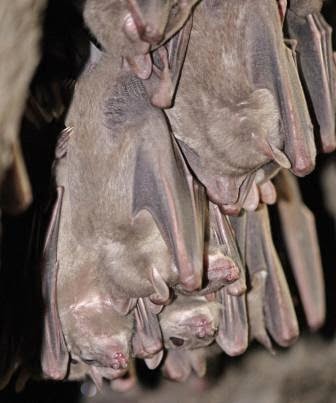
Big picture setting also includes time. When it's summer where Cranky Rah lives, she might be out on the river in her canoe. In the fall, she'll be out eating a taco at the truly awesome Folk Festival. In the winter, she mostly hibernates in her cave, like any good bat. So time of year affects your characters, but what year it is does, too. Popular music changes (Elvis, Duran Duran, One Direction); slang changes (fly, awesome, totes); technology changes (three words: rotary dial phone).

Parts of a Time
Joan Baez totes digs that groovy
Bobby Dylan, you get me, dames?

  • Year and season
  • Time of day/night
  • Music, clothing, slang
  • Famous people/events/politics
  • Technology
  • Food
  • Gender roles
  • Mood (hopeful, violent, exciting)


The Small Picture: The Setting of a Scene
Everything your characters do has a where and when, and both affect how they behave. A fight over the last taco happens differently depending on if the characters are alone or in a crowd. (For the record, Cranky Rah gets the last taco.) Here are a few pieces of the where and when of a scene:

  • Space: indoors or outdoors, big or small, crowded or empty, loud or quiet
  • Who else is there: not just main characters but people in the background
  • What else is going on: eating a meal, running from the law, confronting a werewolf
  • Movement: characters staying in one place or characters moving
  • Weather: threatened by a tornado, trapped in a haunted house by a thunderstorm
  • Familiarity: a place the characters know and feel good in or one that’s strange, unnerving

Setting It Up: Creating Setting
You want specifics? Carne asada with
refrieds on the side. Cumin and garlic!
The way the tortilla dissolves into blissful corn
grit on the tongue! The zing of lime and
silk of avocado! Oh, yeah.
Be specific. If flowers are part of your setting, be specific: Are they roses or daffodils or that really smelly flower that only blooms once every several years?

Use your senses. We tend to focus on sight, but place and time have smell, sound, touch and taste, too. Don’t forget to use the others when setting your scene.

Keep it under control. A quick way to slow a story down is by throwing paragraphs of setting at the reader. Weave your descriptions into the action. It takes practice but gets easier the more you do it.