Tuesday, May 5, 2015

Swedish Authorities Say, "Don't Try This At Home"

Still adorable and oh-so tasty.
The last time I blogged about the weird places research leads us, it was to the edible dormouse, a creature of big-eyed cuteness and, to the Romans, supreme tastiness. Today, it takes us to trying to split an atom at home.

Cranky Rah was not trying to split an atom at home. Cranky Rah was simply learning about how neutrons split apart from protons so she could work it into a metaphor about twins (which sounds weirder than it comes off in the book, I promise). Anyway, what I ran into was this article about this pretty crazy Swedish guy who collected a bunch of radium, americium and uranium and tried to cook them up in sulphuric acid on his stove top as a kind of mini nuclear reactor. Because he was, you know, curious.

What kills me is how he'd been working on this (and blogging about it) for some time before it occurred to him that it might be illegal. He politely contacted the Swedish Radiation Safety Authority and they, needless to say, responded in person.

Friends don't let friends go to
dinner dressed like this.
Now, seriously, don't do this. And in case you have a burning desire to try it (probably because someone just told you not to), this post from Live Science will hopefully convince you that
  1. It's pretty hard for normal people, and even evil despots, to get the materials one needs to split an atom in one's kitchen, and
  2. That even if you were able to get your hands on the appropriate radioactive elements and even if you were able to cook up some uranium 235 next to your Keurig, you wouldn't be around to see the atoms splitting because you would be deader than an edible dormouse at a Roman feast. And probably about as crunchy.
All this talk about radium reminds me of the fabulous song Marie Curie by the Deedle Deedle Dees. And if that's not enough quirky historical wonderfulness set to music for you, listen to their song about Abigail Adams. 

Friday, May 1, 2015

Don't Hate Me Just Because I'm Symbolism

Symbolism gets a bad rap, mostly because of that particular ilk of literature teachers who just can't get it through their heads that sometimes a blue curtain is just a blue curtain. (And don't get my buddy the Dungeon Master started on trains...)

Who can blame the haters of symbolism, really? Statements like A symbol is an object that represents an idea and A symbol has a literal element and a figurative element can put the most lit-loving of us in a coma. But here's the thing: playing with symbolism in your writing can be really fun.

The Simple Symbol

Regardless of what my friend Alex
tells you, stop signs with a white
line around them are not optional.
Let's start back with that mind-numbing definition. What does that mean anyway—a literal element and a figurative element? That's just a way of saying there's an object (the literal) that stands for an idea or emotion (the figurative). You see and translate symbols all around you everyday, like when you understand (I hope) that the object that looks like a stop sign has the meaning Stop!

In their simplest form, symbols can be, well, simple. Like Luke Skywalker wearing white and Darth Vader wearing black. Or an ordinary-looking golden ring standing for ultimate power.

The Not-So-Simple Symbol

It's no worries if a symbol in a story stands for just one thing, but one of the way cool things about symbols is that you don't have to limit yourself to just one—or just one meaning. A symbol can have more than one meaning, or its meaning can change as the protagonist changes.

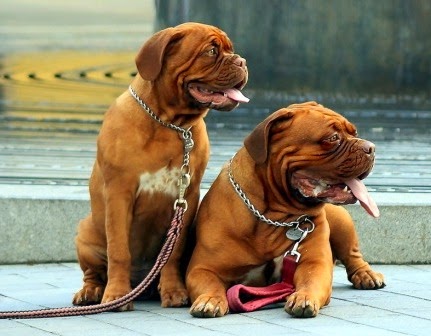
I looked up liberty, and I got this picture
of these dogs. I mean, I guess they're
not at liberty, but they sure look happy.
I must be a tyrannical government.
Let’s look at the mockingjay in The Hunger Games. In the beginning, this “creature the Capitol never intended to exist” is a simple symbol: It reminds Katniss of her father; it stands for the freedom of the woods. But it comes to mean much more.

When Katniss meets Rue, the mockingjay comes to represent not just Katniss’s home, but Rue’s as well. After Rue dies, it reminds Katniss why she’s fighting. And by the end of the books, the mockingjay has grown to stand for resistance and a hunger for freedom, things even the harshest government can’t suppress. Katniss, in fact, is the mockingjay, a “creature the Capitol never intended to exist.” So is Rue. So are all those who stand up to tyranny.

The Symbol on Steroids

Here's another boring definition, of the word motif: A motif is an object, idea or image that repeats throughout a work and supports the theme. One version of a motif is a collection of related symbols that are, in turn, related to a dominant idea in your story.

Let’s say your main character’s life is unraveling. You’ll show this through your plot points, of course, but you might also show it in the knitting project she keeps having to pick apart, the way her hair won’t stay pinned back in barrettes, the foreign language class she’s failing, the way she keeps getting lost. These related images show up over and over, in various forms, reinforcing the idea that your character can’t get the threads of her life wrapped up neat and tidy.

Shaping Extended Symbols into a Story

I dig Yeats, but this statue kinda creeps
me out. Try his poem White Birds or
The Lake Isle of Innisfree.
I’ll be honest, I don’t usually plan symbols into my writing. I give a girl a scarf decorated with brightly colored birds, and the next thing you know, I’ve included a poem by Yeats about sea birds and I've thrown a kid out of a tree like a flightless bird and…you get the picture.

Extended symbols, especially, often grow for the writer during the course of writing. You may not even realize you’ve sown the seeds of an extended symbol until you get to the end. In editing, you can go back and strengthen the symbol, weaving it through the entire story.

Or not. Despite how much English teachers live to parse symbolism in literature, it turns out a lot of writers didn’t intend or don’t see the symbolism in their works that lit majors do. Read this groovy article about a 16-year-old kid who got sick of English class and wrote to a bunch of famous authors about whether his teacher was right to obsess over symbolism.

The cool thing is this: You’re the writer. You can symbolize (and yes, you can use symbolize as an intransitive verb, though it's kind of stinky) intentionally, or symbols can arise in your writing through serendipity. Or you can kick them entirely to the curb. If you think you might want to give symbolism a chance, here are some different elements and characteristics that might give rise to interesting symbols that enrich your story:

  • Color
  • Sound
  • Object
  • Image
  • Texture
  • Weather
  • Physical Characteristic (scar, tattoo, birthmark)
  • Piece of Clothing
  • Phrase/Saying/Quote

Caveat Symbolizer

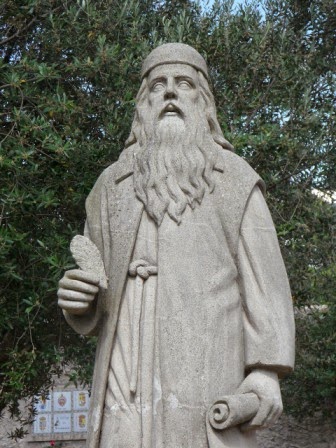
Let this be a lesson to you:
This scholar talked about
symbols so much he
turned to stone.
Remember the lesson of the blue curtains: Don’t beat your reader over the head with symbolism. It may be a bit much to, say, name a character Tempest, give her cloudy gray eyes, have her be temperamental and unpredictable and have the wind whip up every time she’s around. But if used with a modicum of restraint and infused with freshness, symbols are a groovy way to draw your reader deeper into your story. And besides, they really are fun. How often do you get to throw a kid out of a tree to underscore your theme of learning to live life to its fullest?


Tuesday, April 21, 2015

Rah Does Not Live By Words Alone

Usually when Ruby Hazelnut goes out of town, I tell all my friends to pretend I am also out of town—or that I have been abducted by aliens. I have, in fact, never been abducted by aliens and have no interest in being abducted by aliens (though for the record, if I was abducted by aliens I would totally ask them what's up with this whole dark matter nonsense, because I'm pretty sure physicists are just making that up because they are totally stumped). The point is: When one is abducted by aliens, one is unavailable for coffee or lunch or general socializing. And that is how I like everyone to behave when Ruby Hazelnut is out of town, so I can write all day long, every day.

Last week, I did break tradition for one day, to go on a 30-mile bike ride with the Poet-Accountant. I did this for two reasons:

  1. It is generally considered a good idea to hang out with one's spouse occasionally. More so on one's 18th anniversary. This is how one has another anniversary.
  2. Rah loves to ride. Especially long distances. It airs out the brain. And Cranky Rah's brain definitely needs to be aired out. Frequently.
We rode on the C&O Canal Towpath, which is my favorite place to ride, ever. It goes up past the falls of the Potomac River, which is one of the Beautiful Places of the world.

See, here's proof I occasionally leave my cave:


That thing I'm looking at is a river. Crazy, right? (Actually, I seem kind of unimpressed in the picture, but that's just me getting into a good brood.) You think of the Potomac River as that wide placid water making its lazy way past George Washington's digs, but before it gets there, it is this wild foaming thing.


You don't have to bike to enjoy this amazing place; you can just park at Great Falls and walk over. But you should totally bike it if you're ever in the area. The towpath was made for mules to tow barges up the canal, it's really flat and a super easy ride. 

Our next ride? Probably a two-day on the almost-finally-finished Capital Trail, which will run from Richmond to Williamsburg. 

Friday, April 10, 2015

Words Rah Loves: In-laws

Cranky Rah is not a fan of articles or essays that begin with sentences like Webster New World College Dictionary defines cliché as...  Likewise, she doesn't think it's hugely creative to begin a blog post by sharing the outcome of a Google search—and yet here we are:

I just Googled the word in-laws, and in addition to the usual Wikipedia hits, here are some of the things that came up:

  • Dr. Phil's advice on managing in-laws
  • I HATE MY IN-LAWS!!!: In-laws stories
  • Ten Basic Rules for Dealing with In-Laws
  • Curse of the mummyji (from the Economist, about in-laws in India)
  • The weird science of in-laws (from the Boston Globe)
Ouch.

It doesn't get much better when you go to the Online Etymology Dictionary (one of my favorite places online because I am such a word geek). It says the earliest record of brother-in-law is from the thirteenth century, but that by 1894 it had been shortened to in law, meaning "anyone of a relationship not natural." And it shares this quote from Blackwood's Magazine in 1894:

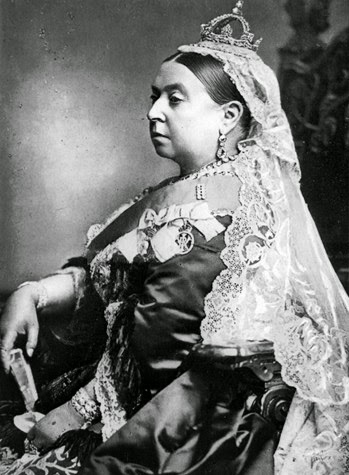
The ultimate in-law.
The position of the 'in-laws' (a happy phrase which is attributed...to her Majesty, than whom no one can be better acquainted with the article) is often not very apt to promote happiness.

Double ancient ouch.

It's not that I don't get it. I do. I know people (and, no, I will not be naming names) who have in-laws who, shall we say, are not natural. And maybe this is like proclaiming you like Brussels sprouts (guilty) or Barry Manilow (double guilty). But I love my in-laws.

I'll be honest: I can be prickly. (This is the nice word for it. Remember, this is a family blog.) And unconventional. My poor in-laws have had to put up with a lot from me. Homeschooling. A disdain for Disney World (I know, I know) and all things commercial. There are a lot of things we don't see eye-to-eye on, philosophically and otherwise. And I'm pretty much impossible to shop for.

But they ask questions, and they talk to the Poet-Accountant and me openly about our parenting and lifestyle decisions, and though I'm sure there have been times they've been doubtful—maybe even worried—they have never been anything but supportive. And I like to think they think that Ruby Hazelnut's turned out all right—so far at least.

So even if that was all I had to say about my in-laws, that would be enough. I adore them, I appreciate their openness and love more than I can say, and I am eternally grateful to them for their son, who is the most awesome husband and father ever. Period.

But, unbelievably, that's not all.

Twice a year, my glorious, fabulous in-laws whisk Ruby Hazelnut away to Grandparent Camp in Atlanta. For one week in the spring and two weeks in the summer, they go to the American Girl Doll store and the Georgia Aquarium; they visit cousins and take trips to the library; they visit Indian mounds and see plays. It's a grandchild's dream, and I know because I had grandparents like that.

And what does Cranky Rah do, you might ask? She writes. She tells all her friends to pretend like she is dead (or, less violently, out of town), and she writes. All day long. Every day. Every day.

It's a writing retreat I don't have to pay for or leave home for. And though I love and adore Ruby Hazelnut and want her, at some point, to come home, these are awesome, awesome days. They make me a little more human. A little.

Cranky Rah's spring retreat starts Monday. Thank you, Rosa and Eddie.
Where Rah will be in her head next week:
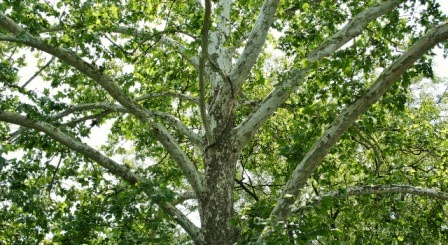
following Wren and Ink up into a sycamore tree and their story.

Tuesday, March 24, 2015

Villains, Redux

Last July, The Three and I talked villains. The Further Four and I just got around to this topic today, mainly because they didn't exist at the time. (Well, the girls existed, individually, just not as a writing group.)

Freewriting villains is fun, so we started out by using Rah's favorite random stuff generator to generate some negative character traits. The three traits the girls liked were rude, secretive and violent. The instructions were simple: Spend five to seven minutes writing a brief bio about a bad guy or girl with those three traits. Make her nasty. Tell me what kinds of horrible things she does.
Yummmmm.

As usual, we got some crazy diversity out of this group of girls who are all about the same age and come from pretty similar backgrounds: adult villains and teen villains and villains of indiscriminate age. Villains who like order and hate long hair; villains who eat bunnies for breakfast; villains who get grounded; and one evocatively named villain called Gobstopper Grasshopper.

After we had our villains firmly in hand, we chatted villainy. This was pretty high level and basic: We talked about how the villain's job is to oppose the main character and cause conflict. We talked about how villains aren't always evil. Sometimes, they're antagonists, like your mom when she destroys your hopes and dreams by not letting you go hang out with your friends because your room still isn't clean.

Most importantly, though, the villain is the hero of her own story. To write a great villain, you need to understand her as well as you understand your main character. You need to answer those three questions: What does my villain want? What's in her way? Does she get it?

To get inside the head of our crazy villains we wrote again, this time from the point of view of the villain. Two rules for this go-round: Write in first person. Don't make your character not evil all of a sudden.

I didn't want these villains to suddenly stop eating bunnies for breakfast; I wanted to know what made that bunny-eater eat bunnies? What had the world done to make him that way? How did he feel about the world being arrayed against him?

Cranky Rah knows how she feels when the world is arrayed against her: Irritable. Vengeful. And in sudden, desperate need of a clean house.
Here's Cranky Rah, her friend Quaker Ann and other
like-minded cleaniacs, power-washing the world.

Thursday, March 5, 2015

From Cranky Rah's Cave: Waxing Philosophic

Cranky Rah is in the throes of a winter malaise. She should be working on the next draft of The Work in Progress, but the brain is Decidedly Not Interested. This happens from time to time, and it is one of the few things in life Cranky Rah does not stress about. It will come back. She will write. That is what Cranky Rah does.

But it's had me thinking about big questions like Why Does One Want to Get Published? and Why Does One Write?

Abandon all hope,
ye who trespass in Rah's cave.
My awesome writing friend Cool J once heard an author say that you need to know why you want to get published—not judge that reason, just know it. For Cool J, it's the need for the visual artist in her to hold her words in her hands. For me, well, let's just say we're not going that deep into Rah's cave today. Beware the caution tape.

Sometimes when I talk to writers, though, it seems like that's all there is. There's a lot of talk about agents and editors and getting published and fretting about deadlines and working through another draft and, quite frankly, it seems like a lot of Work. The kind of work that makes you wonder why anyone would do it in the first place.

So I started wondering: Why do we write? Not how did we start writing or why do we want to get published or why do we write what we write about, but why do writers put pen to paper or fingers to keyboard? What drives the creation?

Phones hung on walls and had these
things called cords, which basically
handcuffed you to the phone.
I had a bright yellow one.
I don't remember exactly when I started writing, but it was sometime in middle school, when I met Jobie. She wrote stories, and I thought that was neat, so I started writing stories. We spent all summer writing and reading our stories to each other, and I mean that pretty much literally. This was the Age of Atari (an epoch of the Stone Age), before home computers or the Internet. Heck, this was before Call Waiting—and there was the rub: My mom worked part time, and she wanted to be able to get in touch with my sister and me if she needed to. So she required that I not be on the phone for the 10 minutes before and after the top of the hour (like 9:50 to 10:10 a.m.) and for the 10 minutes before and after the bottom of the hour.

Jobie and I spent the 20 minutes of each phone ban writing, and then we spent the next 20 minutes on the phone, reading to each other. Then 20 minutes writing, 20 minutes reading. Over and over. All. Day. Long.

What did we write about? Well, let's just say that within the Age of Atari was the Period of The Lost Boys. Jobie was into vampires way before Stephenie Meyer. I was more into rock stars and this one black-haired boy from school, but they could be vampires, too. Anything was possible.

That's when the populating of my brain started, I guess. I don't write because I have some Great Deep Lesson I want to share with the world or because I want to explore the Big Questions of Life. Maybe that happens anyway in the telling of a good story, but I write because there are people in my brain, and they want out.

Connor might be related to this one.
There's Wren, who lives in a treehouse and wakes up in other places a couple of times a week. Ink, the black-haired boy who hears color. Vivian, who wishes her mom's tattoo wasn't on the cover of that country album, and Jacoby with his mad uncle. Connor, who inherited an island of seals, and Waverly, whose dad digs up dead people.

They're all hibernating right now, which I totally get. It's supposed to snow today. Again. And we're all totally over it. But spring is coming. Soon we will be awash in vitamin D, and everyone will wake up. Maybe they're stirring a little even now, which is good, because it's getting a little cramped inside my head.

Sunday, February 22, 2015

Group Hug: Playing with Setting

In Rah's world, the word "tomorrow" doesn't always mean "tomorrow." Sometimes it means "I know I said on Thursday I'd post the next day about writing about setting with The Three, but on Friday I was too busy rock climbing and eating tacos (not at the same time), and on Saturday I was too busy rock climbing and eating a Proper Pie (ditto on not at the same time)." I think we can all agree that these are awesome reasons to not get around to posting.

Anyway, The Three and I did write about setting on Thursday. Since so many good things come in threes, our writing exercise about setting had three steps.

Step One: Get a Character

Start by choosing a character name from a random name generator. Spend five minutes writing a brief bio of the character. You can write anything you want about the character, but he or she must be contemporary. The character name we picked was Jude. The Three love an androgynous name.

After we wrote about Jude, we spent a few minutes talking about what The Three know about setting, which was pretty much what I talked about with The Further Four back in January.

Step Two: Get a Setting

Now, spend five to seven minutes writing about the carousel in the picture, in list or paragraph form, whatever rocks your world. Be sure to include as many of the five senses as you can, and don’t forget to include the carousel's surroundings (meaning if you're riding the carousel, you can see outside of it to what's going on around it).


I loved how a couple of The Three ended up giving the carousel a personality: ominous or lonely. Because that's where we were going next, with the discussion of setting having a personality.

Once we'd had that discussion, it was time to try out writing about setting as a character.


Step Three: Give the Setting Some Anima

(Not anime. Anima. Important distinction.)

Now we want to look at how setting can play a role in how your character behaves. We’re going to place him or her in the setting we wrote about earlier, but we want to give this setting a personality. When you write, you can add in as many other characters as you want—or none at all—but you must assume that there are a bunch of people in this setting, just like in the picture. Write for 10 minutes. Share.

This can be a little tricksy, so you can always assign a personality for the setting: You want the setting to annoy your character or confuse your character or protect your character. In fact, try it all three ways and see how each affects your character and the plot, because the harmony of the world digs things in threes. Like three tacos or three rock climbing partners or three really fabulous teen writers who let me experiment on them every month with writing prompts.