Thursday, May 28, 2015

Group Hug: Writing From the End

The Three and I had our last writing group of the school year last week, so it seemed appropriate to talk about The End and specifically getting past whatever blocks you have to get to the end of a story you're writing. And since we were talking about writing to the end, I thought it'd be fun to write from the end in our writing exercise.

First we warmed up by writing from the beginning. I offered The Three a set of opening dialogue options (from the random dialogue generator of my favorite random writing stuff generator):

  • "You don't think that was just lemonade in your glass, do you?"
  • "H-how long have you been standing there?"
  • "She's old, and it's about time she died."
  • "If you leave now, you lose everything."
  • "I knew you wouldn't be able to see it through."
  • "He was unconscious when I found him."

Be safe: Squeeze your own lemons.
The Three chose "You don't think that was just lemonade in your glass, do you?" and (after a lively discussion about the grammatical issues in that sentence—I totally la-la these girls) we spent 10 minutes writing the story that starts with that line. Amazing, there was not a death in every story written. Of course, some of the stories had more than one death, so it all averaged out in the end.

After we talked about Getting to the End of a story as a writer, it was time to write again. This time, The Three chose to write from "She's old, and it's about time she died." What I didn't tell them until after they had chosen it was that we weren't going to write from the beginning; we were going to write from the end. They had to write to the piece of dialogue instead of from it.

More death ensued. Of course.

Thursday, May 21, 2015

Getting to the End


You might have noticed it’s a lot easier to start a story than to finish one. You’ve got a cast of fascinating characters and an exciting beginning, and you might even know the tragic end it all comes to. But somewhere along the way you get lost.

The Secret of Getting to the End

Here’s the big secret: Write a story you want to finish and decide to finish it. End of blog.

Yeah, yeah; of course that’s not the end of the blog. Because it’s really not that simple, is it? What happens when you hit a wall? You have to figure out how to break through it.

Problem: You’re Bored

If you’re bored with your character or plot, your reader probably will be, too. You know what bores you? Boring things. Duh, right?
I don't know about you, but I'd
find something else to do, too.

So what do you do when you’re bored? First you complain to your mom. Then she tells you she bets that cleaning a toilet would solve that problem real quick. Then you go and find something to make you unbored, because you definitely don’t want to clean the toilet.

So when you’re bored with your characters, find something to make them un-boring.
  • Give a character an obsession or an interest. Make it something that seems, on the surface, out of character. How does that change how she behaves?
  • Change a relationship. Maybe your characters are bored with each other. Maybe they need to break up or betray someone or reveal a secret.
  • Change what happened last. If your protagonist succeeded at something, have her fail—or vice versa.
  • Introduce danger. Maybe your characters are too safe. Hurt or threaten them. If something bad has already happened, make it worse.
  • Get rid of what bores you. Go back to the last point in the story that excited you. Read forward, find that spot where you start to get bored and make something bad happen.
  • Change something elemental. Maybe Brunhilda isn’t the right name for your character. Maybe Marcy is better. Or Skydancer. Maybe she doesn’t live in a faceless suburb but in a downtown building that’s about to be knocked down.
Skydancer is too happy. She needs to live here.

Problem: You Don’t Know What Happens Next

Everything’s going along swimmingly, but you suddenly realize you have no idea what’s going to happen next. You can use any of the tactics above to introduce complications, but you can also try something more structural.
  • Skip ahead. If you know what happens further in the plot, go ahead and write that. Maybe that will help you figure out how to get there, or maybe it will just help you bury your head in the sand until later. (Warning: This is an editing-heavy approach.
  • Trash your last scene. Even if it was working for you, temporarily discard the last scene you wrote, go back to the scene before it and head in a totally different direction.
  • Go back to the beginning. Do you have enough conflict and characters for the long haul? Increase the stakes or add new characters who can cause trouble.
  • Write from the end. If you know how everything ends up, start there and work your way backward.

Problem: You’ve Lost Heart

See, isn't outside better?
What if you find yourself bored with your characters and your plot and at a loss about what happens next? This is where you have to get outside your story and outside your house.

By getting outside of your story, I mean explore the world of your story in a way that doesn’t directly add to word count:
  • Make a scrapbook. Go online and collect pictures that look like characters, locations or things in your story. Find your protagonist’s favorite hat or a special piece of jewelry. Immerse yourself in the physical details of your story’s world.
  • Create a soundtrack. Find a song or put together a whole playlist of songs that reminds you of your story in some way. Listen to it over and over until you get into the mood. 
  • Write an unseen scene. Write something outside the scope of your story: a scene from another character’s point of view; a letter from one character to another; a poem about or by one of your characters.

Cranky Rah likes the new flat white
from Starbuck's. Decaf, because she's
kinda...jumpy.
Sometimes the best thing you can do for your writing, though, is to not write. Go for a walk. Take a shower. Get out of the space you’re in, and let your brain breathe. Meet up with a friend who’s willing to listen to you go on for a while about your story. (Buy her a tasty drink while you’re at it.) Getting someone else excited about your story will get you excited.

Let It Go…Let It Go…

What if, despite everything you’ve tried, nothing you do brings your story back to life? First, just take a break. Work on something else for a while, then come back to your story in a couple of weeks and look at it with fresh eyes. If even that doesn’t leave you feeling like Dr. Frankenstein—“It’s alive! It’s alive!”—then it’s probably time to let it go.


It happens to the best of us, but don’t let it get you down. Everything you write, even the things you don’t finish—sometimes especially the things you don’t finish—make you a stronger writer. Just keep at it, and keep everything you write. Old writing is great for two things: proof that you’re getting better—and a good laugh right when you need one.

Tuesday, May 5, 2015

Swedish Authorities Say, "Don't Try This At Home"

Still adorable and oh-so tasty.
The last time I blogged about the weird places research leads us, it was to the edible dormouse, a creature of big-eyed cuteness and, to the Romans, supreme tastiness. Today, it takes us to trying to split an atom at home.

Cranky Rah was not trying to split an atom at home. Cranky Rah was simply learning about how neutrons split apart from protons so she could work it into a metaphor about twins (which sounds weirder than it comes off in the book, I promise). Anyway, what I ran into was this article about this pretty crazy Swedish guy who collected a bunch of radium, americium and uranium and tried to cook them up in sulphuric acid on his stove top as a kind of mini nuclear reactor. Because he was, you know, curious.

What kills me is how he'd been working on this (and blogging about it) for some time before it occurred to him that it might be illegal. He politely contacted the Swedish Radiation Safety Authority and they, needless to say, responded in person.

Friends don't let friends go to
dinner dressed like this.
Now, seriously, don't do this. And in case you have a burning desire to try it (probably because someone just told you not to), this post from Live Science will hopefully convince you that
  1. It's pretty hard for normal people, and even evil despots, to get the materials one needs to split an atom in one's kitchen, and
  2. That even if you were able to get your hands on the appropriate radioactive elements and even if you were able to cook up some uranium 235 next to your Keurig, you wouldn't be around to see the atoms splitting because you would be deader than an edible dormouse at a Roman feast. And probably about as crunchy.
All this talk about radium reminds me of the fabulous song Marie Curie by the Deedle Deedle Dees. And if that's not enough quirky historical wonderfulness set to music for you, listen to their song about Abigail Adams. 

Friday, May 1, 2015

Don't Hate Me Just Because I'm Symbolism

Symbolism gets a bad rap, mostly because of that particular ilk of literature teachers who just can't get it through their heads that sometimes a blue curtain is just a blue curtain. (And don't get my buddy the Dungeon Master started on trains...)

Who can blame the haters of symbolism, really? Statements like A symbol is an object that represents an idea and A symbol has a literal element and a figurative element can put the most lit-loving of us in a coma. But here's the thing: playing with symbolism in your writing can be really fun.

The Simple Symbol

Regardless of what my friend Alex
tells you, stop signs with a white
line around them are not optional.
Let's start back with that mind-numbing definition. What does that mean anyway—a literal element and a figurative element? That's just a way of saying there's an object (the literal) that stands for an idea or emotion (the figurative). You see and translate symbols all around you everyday, like when you understand (I hope) that the object that looks like a stop sign has the meaning Stop!

In their simplest form, symbols can be, well, simple. Like Luke Skywalker wearing white and Darth Vader wearing black. Or an ordinary-looking golden ring standing for ultimate power.

The Not-So-Simple Symbol

It's no worries if a symbol in a story stands for just one thing, but one of the way cool things about symbols is that you don't have to limit yourself to just one—or just one meaning. A symbol can have more than one meaning, or its meaning can change as the protagonist changes.
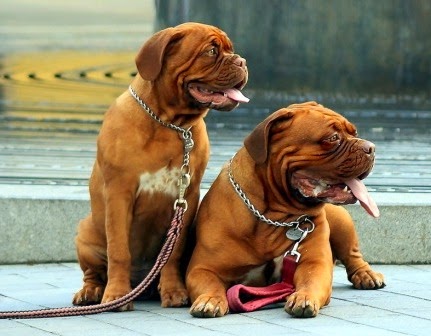
I looked up liberty, and I got this picture
of these dogs. I mean, I guess they're
not at liberty, but they sure look happy.
I must be a tyrannical government.
Let’s look at the mockingjay in The Hunger Games. In the beginning, this “creature the Capitol never intended to exist” is a simple symbol: It reminds Katniss of her father; it stands for the freedom of the woods. But it comes to mean much more.

When Katniss meets Rue, the mockingjay comes to represent not just Katniss’s home, but Rue’s as well. After Rue dies, it reminds Katniss why she’s fighting. And by the end of the books, the mockingjay has grown to stand for resistance and a hunger for freedom, things even the harshest government can’t suppress. Katniss, in fact, is the mockingjay, a “creature the Capitol never intended to exist.” So is Rue. So are all those who stand up to tyranny.

The Symbol on Steroids

Here's another boring definition, of the word motif: A motif is an object, idea or image that repeats throughout a work and supports the theme. One version of a motif is a collection of related symbols that are, in turn, related to a dominant idea in your story.

Let’s say your main character’s life is unraveling. You’ll show this through your plot points, of course, but you might also show it in the knitting project she keeps having to pick apart, the way her hair won’t stay pinned back in barrettes, the foreign language class she’s failing, the way she keeps getting lost. These related images show up over and over, in various forms, reinforcing the idea that your character can’t get the threads of her life wrapped up neat and tidy.

Shaping Extended Symbols into a Story

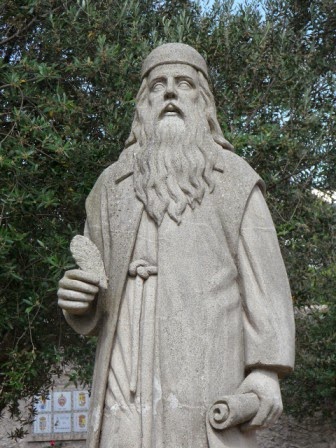
I dig Yeats, but this statue kinda creeps
me out. Try his poem White Birds or
The Lake Isle of Innisfree.
I’ll be honest, I don’t usually plan symbols into my writing. I give a girl a scarf decorated with brightly colored birds, and the next thing you know, I’ve included a poem by Yeats about sea birds and I've thrown a kid out of a tree like a flightless bird and…you get the picture.

Extended symbols, especially, often grow for the writer during the course of writing. You may not even realize you’ve sown the seeds of an extended symbol until you get to the end. In editing, you can go back and strengthen the symbol, weaving it through the entire story.

Or not. Despite how much English teachers live to parse symbolism in literature, it turns out a lot of writers didn’t intend or don’t see the symbolism in their works that lit majors do. Read this groovy article about a 16-year-old kid who got sick of English class and wrote to a bunch of famous authors about whether his teacher was right to obsess over symbolism.

The cool thing is this: You’re the writer. You can symbolize (and yes, you can use symbolize as an intransitive verb, though it's kind of stinky) intentionally, or symbols can arise in your writing through serendipity. Or you can kick them entirely to the curb. If you think you might want to give symbolism a chance, here are some different elements and characteristics that might give rise to interesting symbols that enrich your story:

  • Color
  • Sound
  • Object
  • Image
  • Texture
  • Weather
  • Physical Characteristic (scar, tattoo, birthmark)
  • Piece of Clothing
  • Phrase/Saying/Quote

Caveat Symbolizer

Let this be a lesson to you:
This scholar talked about
symbols so much he
turned to stone.
Remember the lesson of the blue curtains: Don’t beat your reader over the head with symbolism. It may be a bit much to, say, name a character Tempest, give her cloudy gray eyes, have her be temperamental and unpredictable and have the wind whip up every time she’s around. But if used with a modicum of restraint and infused with freshness, symbols are a groovy way to draw your reader deeper into your story. And besides, they really are fun. How often do you get to throw a kid out of a tree to underscore your theme of learning to live life to its fullest?


Tuesday, April 21, 2015

Rah Does Not Live By Words Alone

Usually when Ruby Hazelnut goes out of town, I tell all my friends to pretend I am also out of town—or that I have been abducted by aliens. I have, in fact, never been abducted by aliens and have no interest in being abducted by aliens (though for the record, if I was abducted by aliens I would totally ask them what's up with this whole dark matter nonsense, because I'm pretty sure physicists are just making that up because they are totally stumped). The point is: When one is abducted by aliens, one is unavailable for coffee or lunch or general socializing. And that is how I like everyone to behave when Ruby Hazelnut is out of town, so I can write all day long, every day.

Last week, I did break tradition for one day, to go on a 30-mile bike ride with the Poet-Accountant. I did this for two reasons:

  1. It is generally considered a good idea to hang out with one's spouse occasionally. More so on one's 18th anniversary. This is how one has another anniversary.
  2. Rah loves to ride. Especially long distances. It airs out the brain. And Cranky Rah's brain definitely needs to be aired out. Frequently.
We rode on the C&O Canal Towpath, which is my favorite place to ride, ever. It goes up past the falls of the Potomac River, which is one of the Beautiful Places of the world.

See, here's proof I occasionally leave my cave:


That thing I'm looking at is a river. Crazy, right? (Actually, I seem kind of unimpressed in the picture, but that's just me getting into a good brood.) You think of the Potomac River as that wide placid water making its lazy way past George Washington's digs, but before it gets there, it is this wild foaming thing.


You don't have to bike to enjoy this amazing place; you can just park at Great Falls and walk over. But you should totally bike it if you're ever in the area. The towpath was made for mules to tow barges up the canal, it's really flat and a super easy ride. 

Our next ride? Probably a two-day on the almost-finally-finished Capital Trail, which will run from Richmond to Williamsburg. 

Friday, April 10, 2015

Words Rah Loves: In-laws

Cranky Rah is not a fan of articles or essays that begin with sentences like Webster New World College Dictionary defines cliché as...  Likewise, she doesn't think it's hugely creative to begin a blog post by sharing the outcome of a Google search—and yet here we are:

I just Googled the word in-laws, and in addition to the usual Wikipedia hits, here are some of the things that came up:

  • Dr. Phil's advice on managing in-laws
  • I HATE MY IN-LAWS!!!: In-laws stories
  • Ten Basic Rules for Dealing with In-Laws
  • Curse of the mummyji (from the Economist, about in-laws in India)
  • The weird science of in-laws (from the Boston Globe)
Ouch.

It doesn't get much better when you go to the Online Etymology Dictionary (one of my favorite places online because I am such a word geek). It says the earliest record of brother-in-law is from the thirteenth century, but that by 1894 it had been shortened to in law, meaning "anyone of a relationship not natural." And it shares this quote from Blackwood's Magazine in 1894:

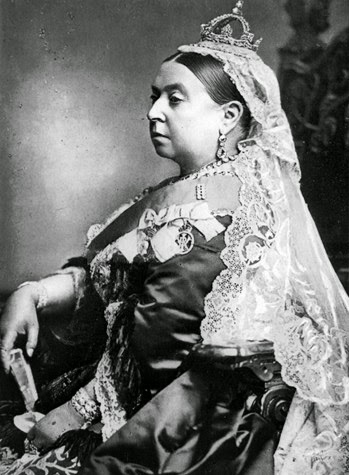
The ultimate in-law.
The position of the 'in-laws' (a happy phrase which is attributed...to her Majesty, than whom no one can be better acquainted with the article) is often not very apt to promote happiness.

Double ancient ouch.

It's not that I don't get it. I do. I know people (and, no, I will not be naming names) who have in-laws who, shall we say, are not natural. And maybe this is like proclaiming you like Brussels sprouts (guilty) or Barry Manilow (double guilty). But I love my in-laws.

I'll be honest: I can be prickly. (This is the nice word for it. Remember, this is a family blog.) And unconventional. My poor in-laws have had to put up with a lot from me. Homeschooling. A disdain for Disney World (I know, I know) and all things commercial. There are a lot of things we don't see eye-to-eye on, philosophically and otherwise. And I'm pretty much impossible to shop for.

But they ask questions, and they talk to the Poet-Accountant and me openly about our parenting and lifestyle decisions, and though I'm sure there have been times they've been doubtful—maybe even worried—they have never been anything but supportive. And I like to think they think that Ruby Hazelnut's turned out all right—so far at least.

So even if that was all I had to say about my in-laws, that would be enough. I adore them, I appreciate their openness and love more than I can say, and I am eternally grateful to them for their son, who is the most awesome husband and father ever. Period.

But, unbelievably, that's not all.

Twice a year, my glorious, fabulous in-laws whisk Ruby Hazelnut away to Grandparent Camp in Atlanta. For one week in the spring and two weeks in the summer, they go to the American Girl Doll store and the Georgia Aquarium; they visit cousins and take trips to the library; they visit Indian mounds and see plays. It's a grandchild's dream, and I know because I had grandparents like that.

And what does Cranky Rah do, you might ask? She writes. She tells all her friends to pretend like she is dead (or, less violently, out of town), and she writes. All day long. Every day. Every day.

It's a writing retreat I don't have to pay for or leave home for. And though I love and adore Ruby Hazelnut and want her, at some point, to come home, these are awesome, awesome days. They make me a little more human. A little.

Cranky Rah's spring retreat starts Monday. Thank you, Rosa and Eddie.
Where Rah will be in her head next week:
following Wren and Ink up into a sycamore tree and their story.

Tuesday, March 24, 2015

Villains, Redux

Last July, The Three and I talked villains. The Further Four and I just got around to this topic today, mainly because they didn't exist at the time. (Well, the girls existed, individually, just not as a writing group.)

Freewriting villains is fun, so we started out by using Rah's favorite random stuff generator to generate some negative character traits. The three traits the girls liked were rude, secretive and violent. The instructions were simple: Spend five to seven minutes writing a brief bio about a bad guy or girl with those three traits. Make her nasty. Tell me what kinds of horrible things she does.
Yummmmm.

As usual, we got some crazy diversity out of this group of girls who are all about the same age and come from pretty similar backgrounds: adult villains and teen villains and villains of indiscriminate age. Villains who like order and hate long hair; villains who eat bunnies for breakfast; villains who get grounded; and one evocatively named villain called Gobstopper Grasshopper.

After we had our villains firmly in hand, we chatted villainy. This was pretty high level and basic: We talked about how the villain's job is to oppose the main character and cause conflict. We talked about how villains aren't always evil. Sometimes, they're antagonists, like your mom when she destroys your hopes and dreams by not letting you go hang out with your friends because your room still isn't clean.

Most importantly, though, the villain is the hero of her own story. To write a great villain, you need to understand her as well as you understand your main character. You need to answer those three questions: What does my villain want? What's in her way? Does she get it?

To get inside the head of our crazy villains we wrote again, this time from the point of view of the villain. Two rules for this go-round: Write in first person. Don't make your character not evil all of a sudden.

I didn't want these villains to suddenly stop eating bunnies for breakfast; I wanted to know what made that bunny-eater eat bunnies? What had the world done to make him that way? How did he feel about the world being arrayed against him?

Cranky Rah knows how she feels when the world is arrayed against her: Irritable. Vengeful. And in sudden, desperate need of a clean house.
Here's Cranky Rah, her friend Quaker Ann and other
like-minded cleaniacs, power-washing the world.